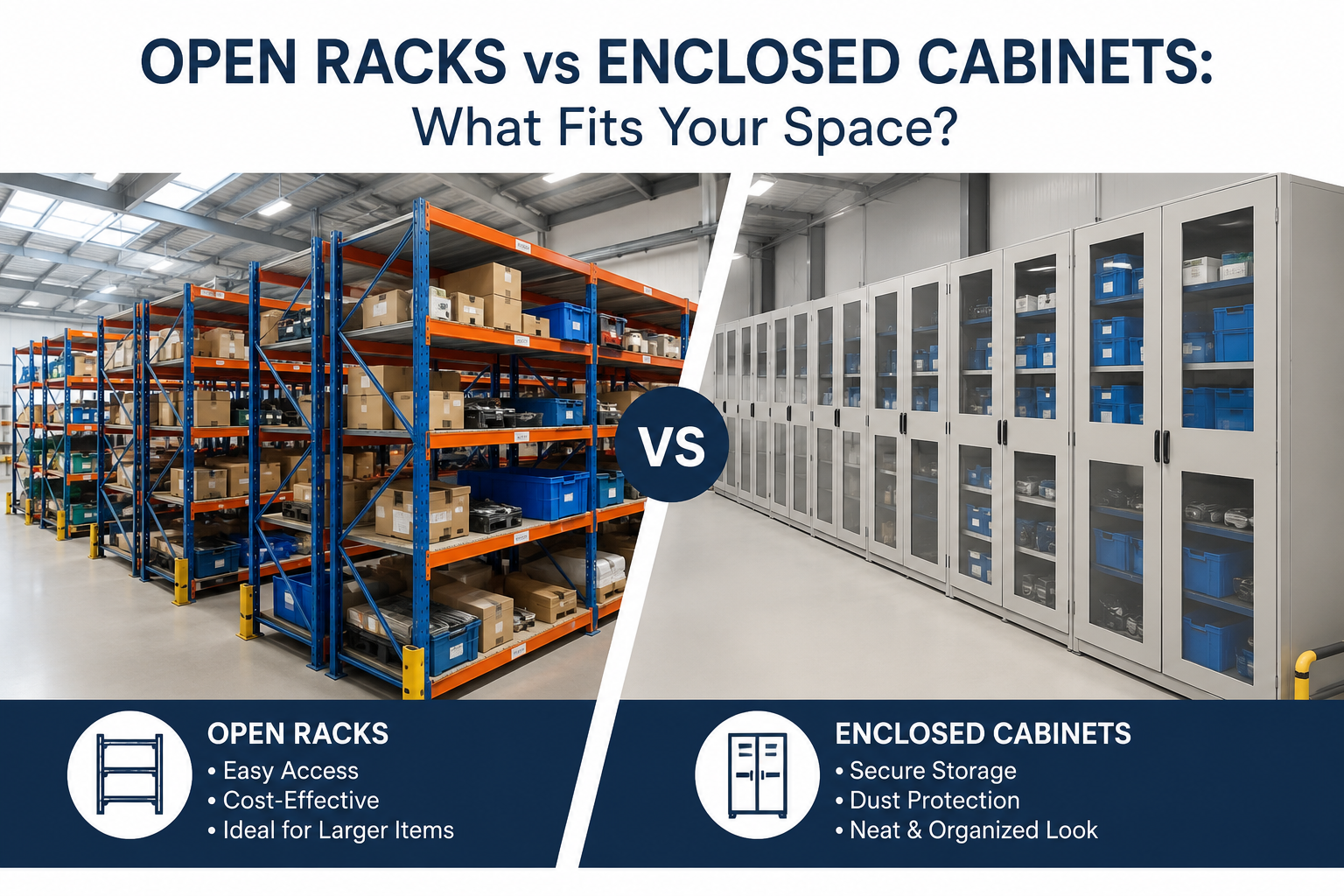
Choosing a storage solution isn’t just about how many items you need to fit, it’s also about how that storage looks, functions, and holds up over time. Two of the most common options businesses and homeowners compare are open racking systems and enclosed cabinets. Both have a place in different environments, but choosing the wrong one for your space can mean wasted budget, poor accessibility, or items left exposed to dust and damage. This guide compares open racks and enclosed cabinets across the factors that matter most, so you can decide which one actually fits your space.
The Core Difference
Open racks are exactly what they sound like: shelving with no doors or panels, giving direct access to everything stored on them. Enclosed cabinets add doors, panels, or covers that shield contents from view and from the surrounding environment. The choice between the two usually comes down to how often you access what’s inside, what you’re storing, and whether appearance or protection matters more for that particular space.
1. Consider What You’re Storing
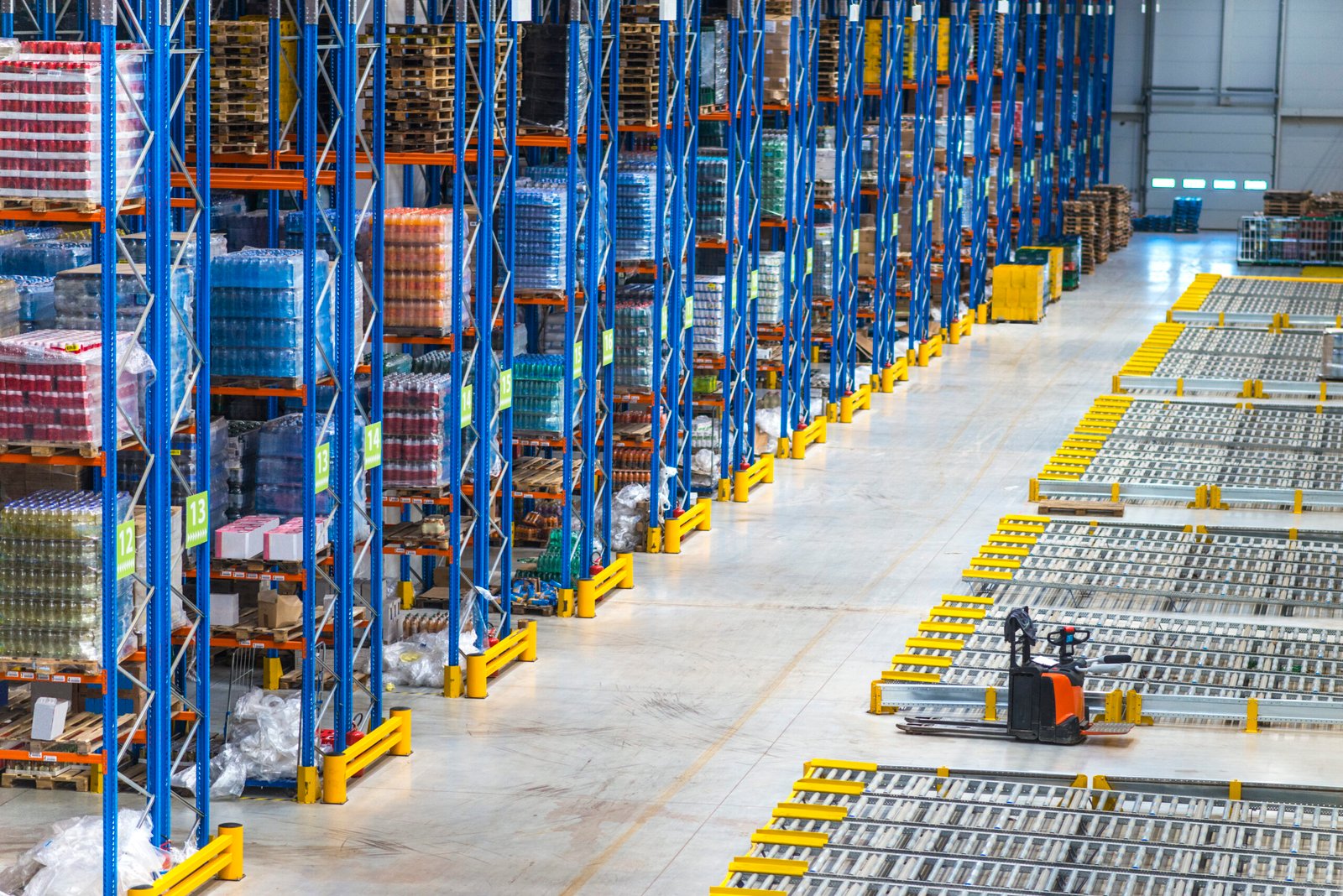
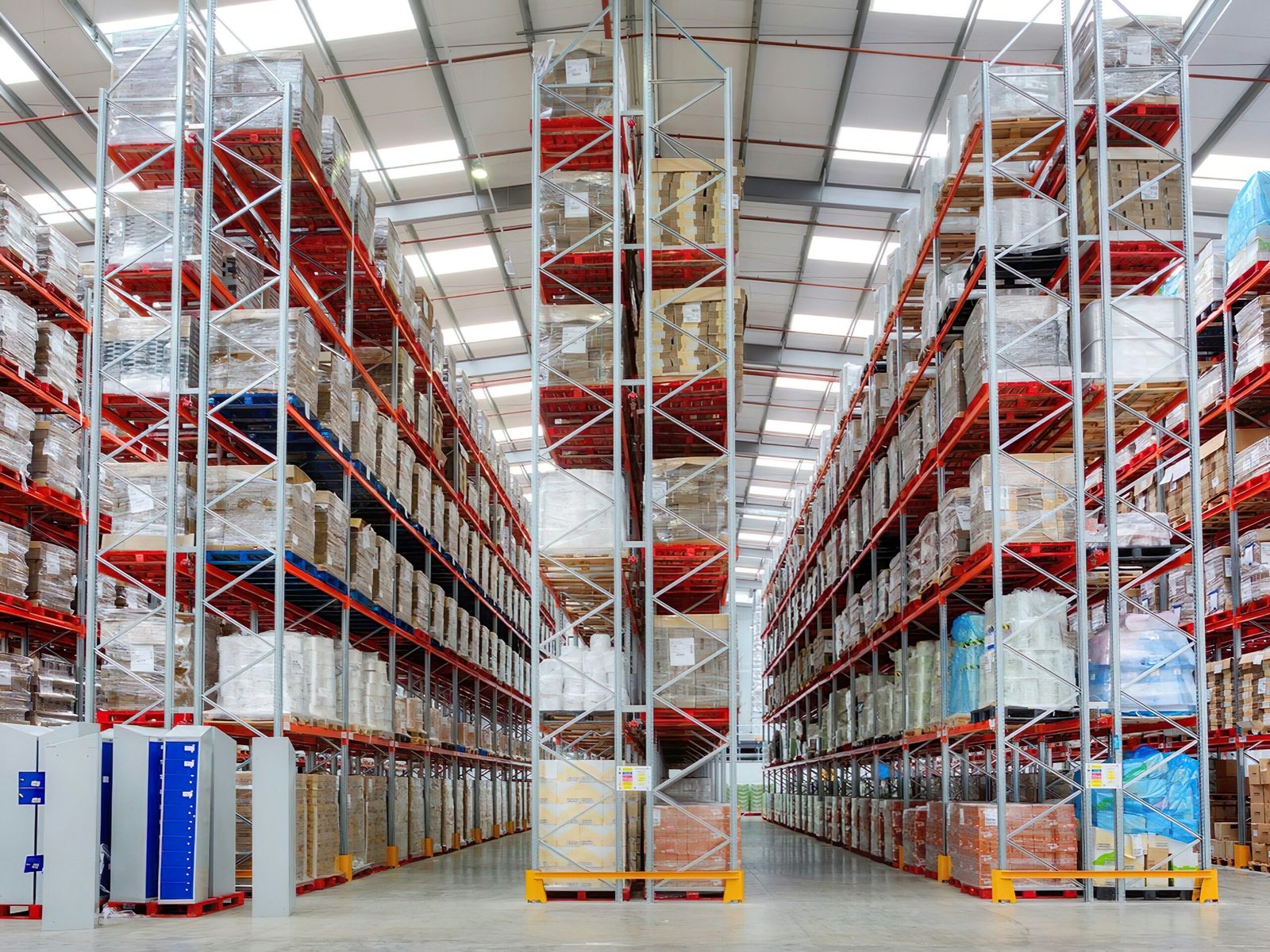
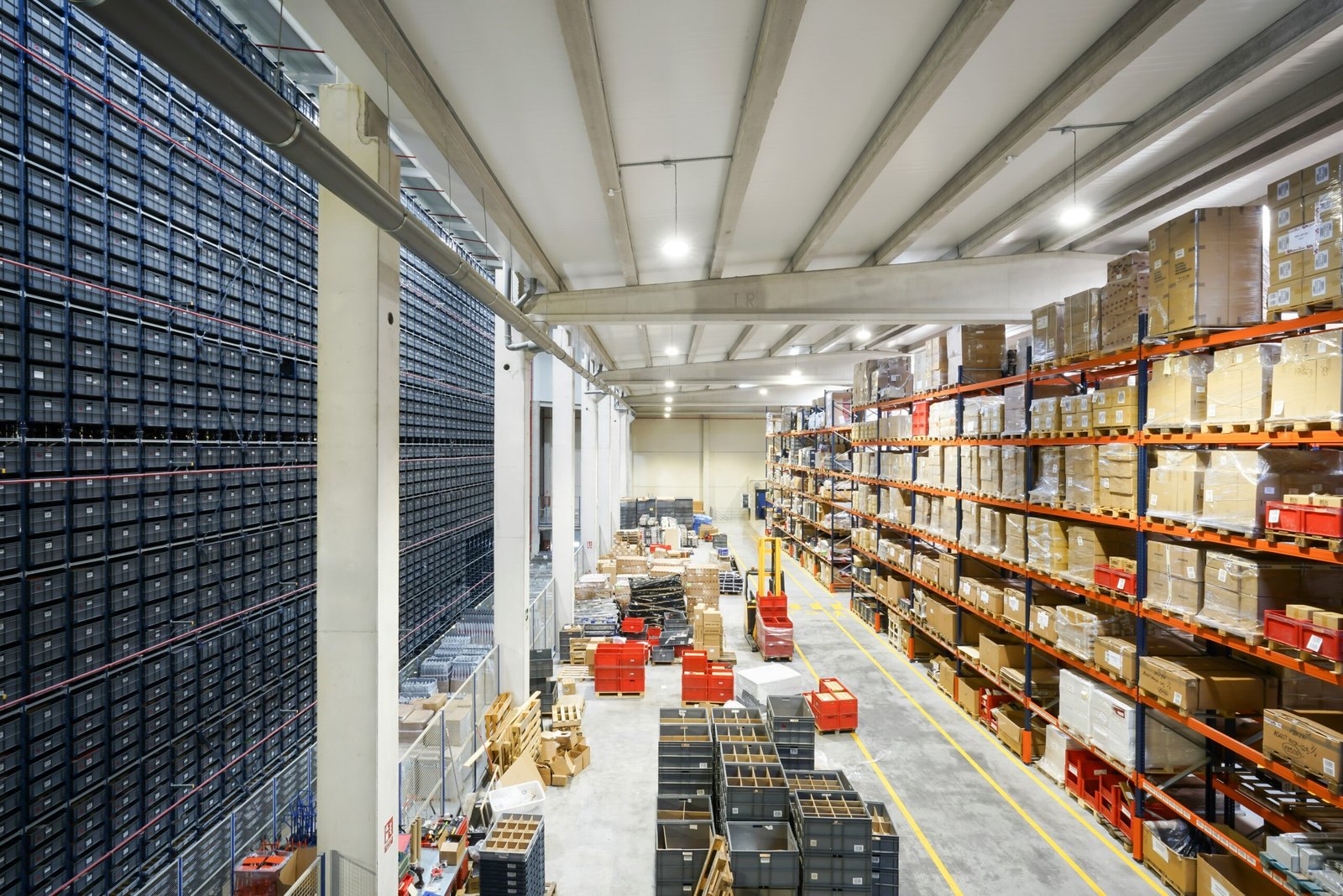
Open racks work best for items that are picked frequently, bulky, or don’t need protection from dust, such as warehouse inventory, tools, packaged goods, or retail backroom stock. A storage rack system built around open shelving lets staff scan and grab items quickly without opening doors first, which speeds up daily operations in busy environments.
Enclosed cabinets, on the other hand, are better suited to items that need protection: documents, electronics, chemicals, or anything sensitive to dust and moisture. If what you’re storing needs to stay clean, secure, or out of sight, a cabinet is usually the safer choice.
2. Accessibility and Speed
In fast-paced settings, open racks win on speed. There’s no door to open, no latch to unlock, just direct access to the shelf. This is one reason boltless racking systems are so popular in warehouses and storerooms, they combine open access with quick, tool-free assembly and reconfiguration. Enclosed cabinets add a small amount of friction to every retrieval, which adds up in high-turnover environments but is barely noticeable for items accessed only occasionally.
3. Dust, Moisture, and Long-Term Protection
This is where enclosed cabinets clearly outperform open shelving. Doors and panels keep dust, moisture, and pests away from stored items, which matters most in humid climates or facilities near loading docks and open bays. If you’re storing anything that degrades with exposure to air or light, an enclosed cabinet protects your investment far better than an open rack ever could.
That said, well-built open racks aren’t defenseless. Epoxy powder-coated frames resist corrosion and general wear, so while the items on the shelf may be exposed, the rack structure itself stays durable for years, even in Singapore’s humid conditions.
4. Space Efficiency and Cost
Open racks are almost always more space-efficient and budget-friendly. Without doors or panel materials, they cost less to manufacture and take up less footprint for the same storage volume, since you don’t need extra clearance for doors to swing open. Configurations like L-shaped and U-shaped racks can also make use of corners that enclosed cabinets often can’t utilize as efficiently, since cabinet doors need room to open outward.
Enclosed cabinets generally cost more per unit of storage, both because of the additional materials and because their fixed door dimensions limit how creatively they can be configured around irregular spaces.
5. Appearance and Environment
For customer-facing areas, showrooms, or tidy office environments, enclosed cabinets present a cleaner, more polished look since contents stay hidden from view. Open racks, by contrast, suit back-of-house environments like warehouses, storerooms, and garages, where function matters more than appearance and visibility of stock is actually a benefit rather than a drawback.
6. Mixing Both in One Layout
Many businesses don’t need to choose just one. A common approach is to use open metal racks for high-turnover inventory and bulk goods, while reserving enclosed cabinets for sensitive documents, electronics, or display-facing areas. Planning your racking system layout around these different zones ensures each item type gets the right balance of accessibility and protection.
How Climate Affects the Decision in Singapore
Singapore’s humidity and heat add another layer to this decision. Enclosed cabinets can trap moisture inside if not ventilated properly, which sometimes accelerates mold or corrosion for sensitive items rather than preventing it. Open racks, by contrast, allow airflow around stored goods, reducing the risk of trapped humidity. This is one reason many local businesses prefer open, well-coated racking for general storage and reserve enclosed cabinets specifically for items that genuinely require a sealed environment, such as electronics or paper records.
Quick Decision Checklist
- Items are accessed frequently and speed matters → open racks
- Items need protection from dust, moisture, or light → enclosed cabinets
- Budget and space efficiency are top priorities → open racks
- Appearance and a clean, hidden look matter → enclosed cabinets
- Mixed inventory with different needs → combine both in one layout
Need Help Planning the Right Storage Layout?
At ASC Racking, we help businesses and homeowners across Singapore choose the right mix of open and enclosed storage racks for their space. Every rack we supply is boltless for fast, tool-free assembly and finished with epoxy powder coating for long-term durability, so your open shelving stays strong and rust-resistant even without the protection of doors or panels. We also provide free delivery and installation across Singapore.