How should you label storage rack locations?
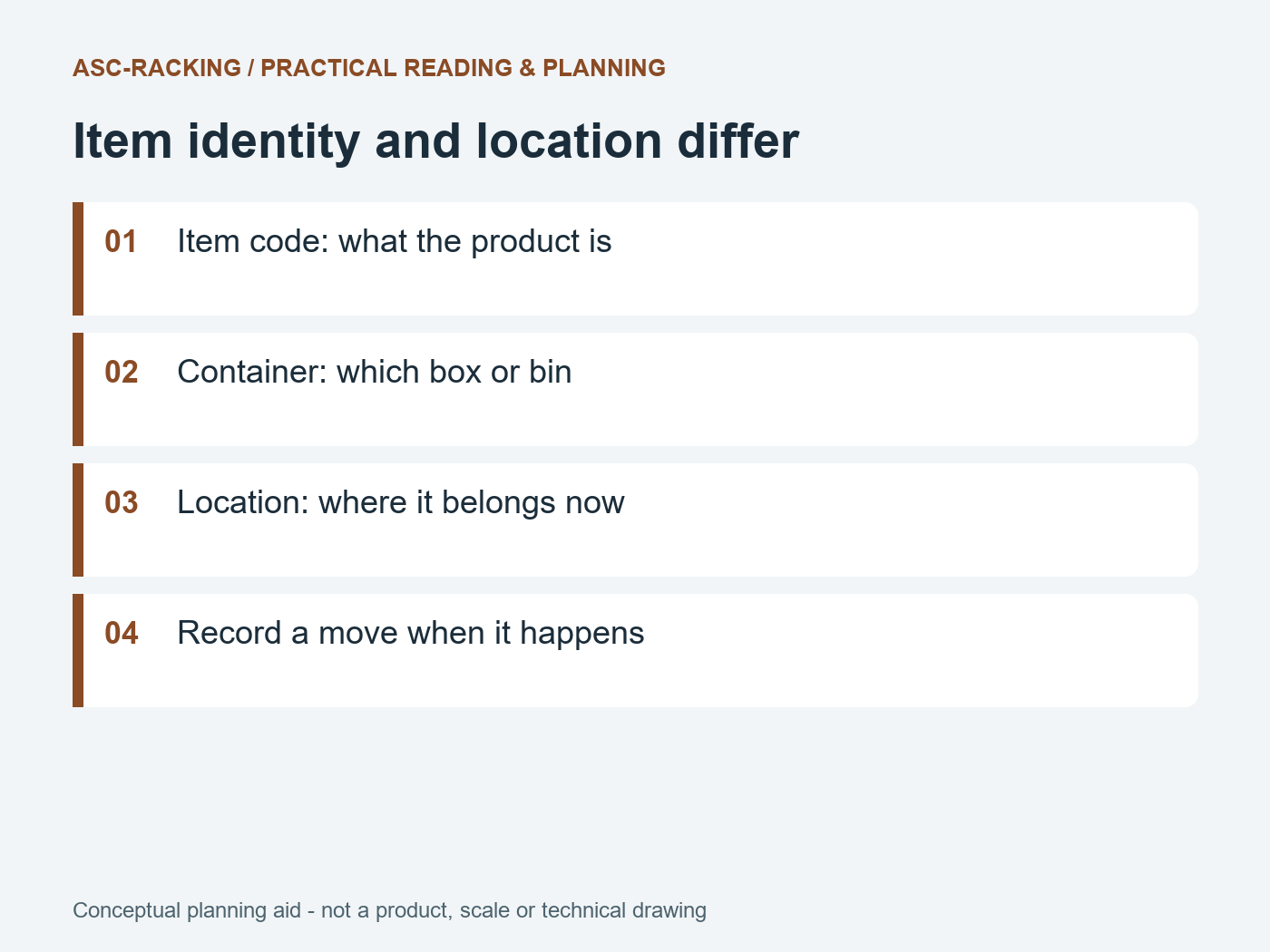
Give each storage location a clear code, use the same code in the stock record and teach the team how to return items to that location. Storage rack labelling works best when the item’s identity and its storage address remain separate. Moving a box should update where it is recorded, rather than require renaming the product or relying on someone’s memory.
“The second rack at the back” can work for one person and fail for the next. A new staff member may approach from another entrance, or the room may gain a further rack. A modest location system provides a shared reference without needing to turn a small stockroom into an automated warehouse.
This guide concerns labels and stock records for hand-picked shelving. It does not specify a racking layout, load capacity or installation method. ASC Racking’s storage service page describes boltless shelving for stockrooms and related spaces; it explicitly distinguishes that work from pallet racking.
Separate the product from the place
An item code identifies what something is. A location code identifies where it belongs. If both are treated as the same thing, a location change can create confusion in the stock record even though the product itself has not changed.
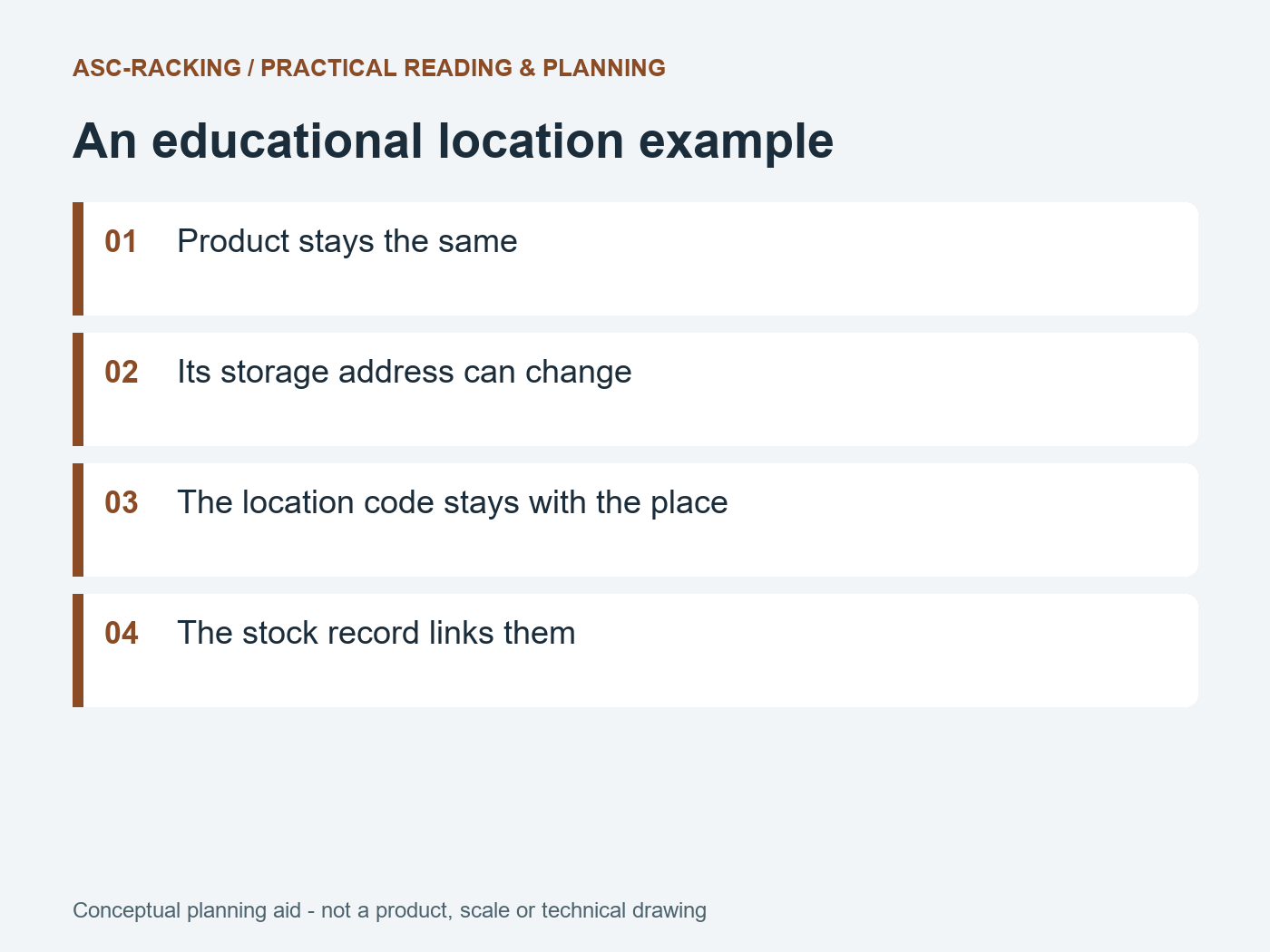
For an educational example, a small parts store might keep a product named “blue handle” at location A-02. The product name remains the same if it moves to B-01. The stock record changes its location, and the location label remains useful for whatever is assigned there next. These are example references, not a prescribed numbering standard.
| Reference | What it identifies | What happens when stock moves |
|---|---|---|
| Item code or product name | The product or stock category. | It normally continues to identify the same item. |
| Location code | The agreed shelf, bay or storage position. | The stock record is updated to the new location. |
| Container reference | A particular labelled box or bin, where useful. | Its contents and location need to remain traceable in the record. |
| Temporary status | A reason the stock is not in its usual available state. | The responsible person records the next action rather than hiding it in a location name. |
Choose a code people can explain aloud
Start with the smallest structure the team needs. A room or zone reference followed by a rack or shelf reference may be sufficient. Avoid including every possible detail in a long code if staff cannot read or communicate it during normal work.
Agree a consistent direction for reading the references and demonstrate it from the normal approach. A person should not have to guess whether the sequence begins at the door, a corner or the far end. Add a simple location key where needed.
Do not adopt a barcode or software naming structure merely because it looks more advanced. If a current inventory system already has location references, check that the physical labels use those same references. A second competing code can be more confusing than the original description.
Make labels usable at the point of retrieval
View a proposed label from the position where staff normally identify the stock. Check whether it can be read without moving unrelated items. A neat label hidden behind a carton does not help someone locate the correct position.
Keep item information consistent with the stock record. If abbreviations are used, establish which ones the team understands. A handwritten nickname familiar to one person may be meaningless to someone covering a shift.
Choose any label or attachment method with the rack supplier’s instructions in mind. Do not cover safety information, alter the rack or assume that drilling, adhesives or other attachments are appropriate. The labelling plan should work with the installed shelving rather than modify its structure.
Give temporary stock an explicit status
Returns, unconfirmed deliveries and items awaiting a decision should not quietly become ordinary available stock because they are placed on an empty shelf. Agree how their status is identified and who resolves it.
A small operation might use a named holding location and a record of why the item is there. That is an organisational choice, not a recommendation for storing hazardous or regulated materials. Where goods have special handling requirements, follow the applicable product and workplace arrangements.
The important distinction is between where an item is and whether it is ready for normal use or sale. A location label alone does not establish the latter. Keep the status decision visible in the stock process.
Update the record when the move happens
Agree who changes the stock record when a box is moved and how the change is communicated. If everyone assumes someone else will update it later, the physical labels can be correct while the inventory list becomes unreliable.
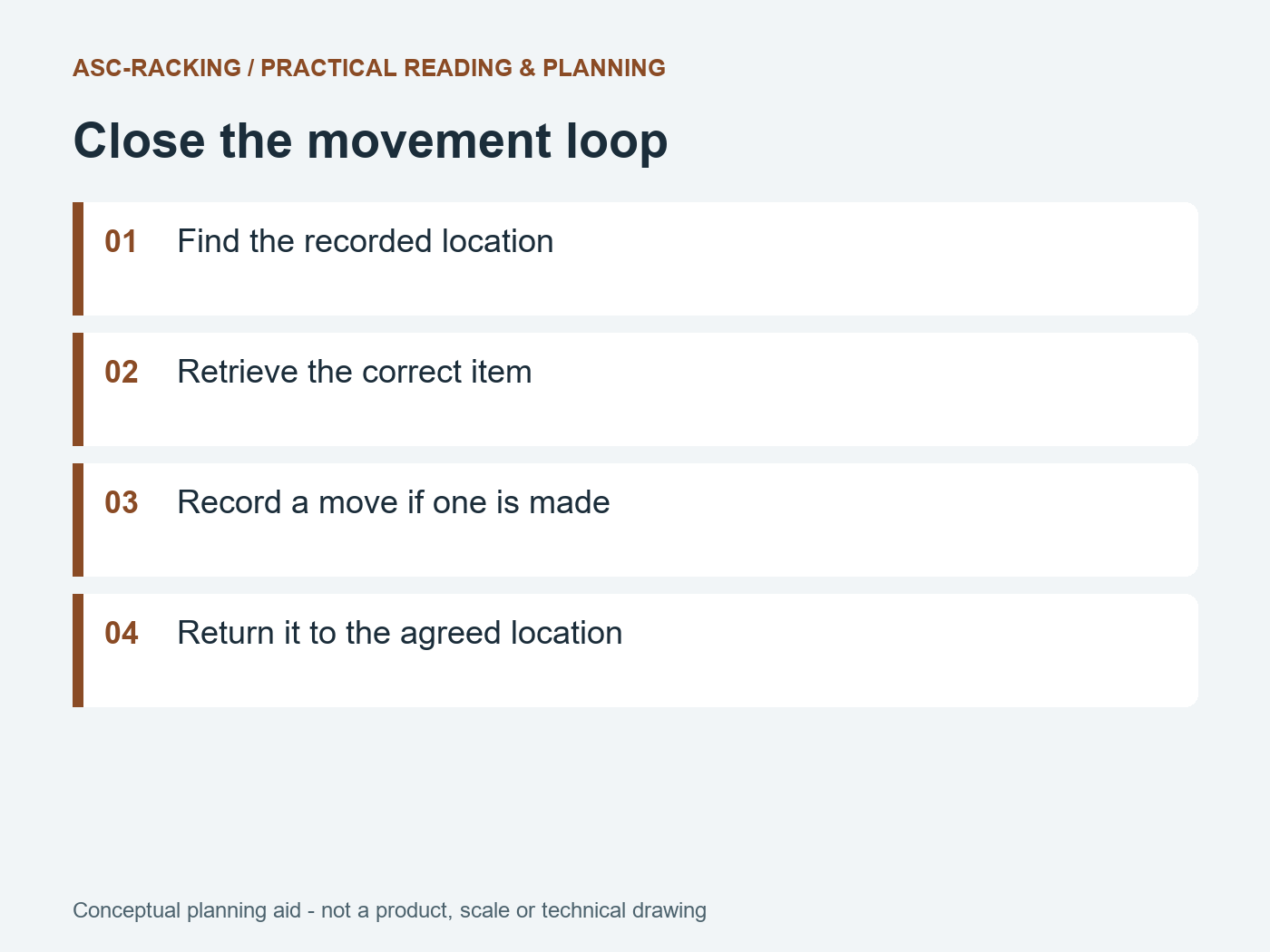
Test the process with a simple retrieval and return. Ask a colleague who did not create the system to find an item using the record, identify its location and return it appropriately. Any point where they have to ask for an unwritten explanation is useful feedback.
Keep shelf selection separate from organisation
Labels do not establish that a shelf is suitable for its contents. Item sizes, weights, access and the rack’s specified use still need the appropriate assessment. If stock changes, do not infer that an empty space or another label gives permission to change the rack configuration.
ASC’s Full Metal range and PVC Laminated range describe actual product categories. Their names are not interchangeable load or suitability guarantees. The labelling process can be planned alongside the supplier’s confirmed shelving arrangement.
The separate adjustable and fixed shelving guide addresses configuration choices. This article concerns how the team identifies and records the agreed locations after those choices have been made.
Review the system when it stops answering questions
Look for duplicate codes, vague descriptions and items routinely found away from their recorded location. Investigate the reason before printing more labels. The difficulty may be a stock category that needs clarifying, a move that was not recorded or an impractical return process.
Keep the location key current when the room or allocation changes. A useful system can remain simple as long as the references match actual practice and the team knows who maintains them.
Rack labelling questions
Do small stockrooms need barcodes?
Not necessarily. Use references that the current team and records can maintain. Barcodes do not solve inconsistent locations or unrecorded moves by themselves.
Should the product name be printed on the rack?
It may be useful, but keep the location reference distinct. The product allocation can change while the physical position remains the same.
Can a label show the rack’s permitted load?
Use only information confirmed for the actual system through the appropriate supplier or workplace process. An organisational label must not invent or replace safety information.
How do I know whether the system is understandable?
Have someone use the record to locate and return an item without relying on your memory. Clarify any reference or step that they cannot explain.


