How should a seasonal stockroom handover be planned?
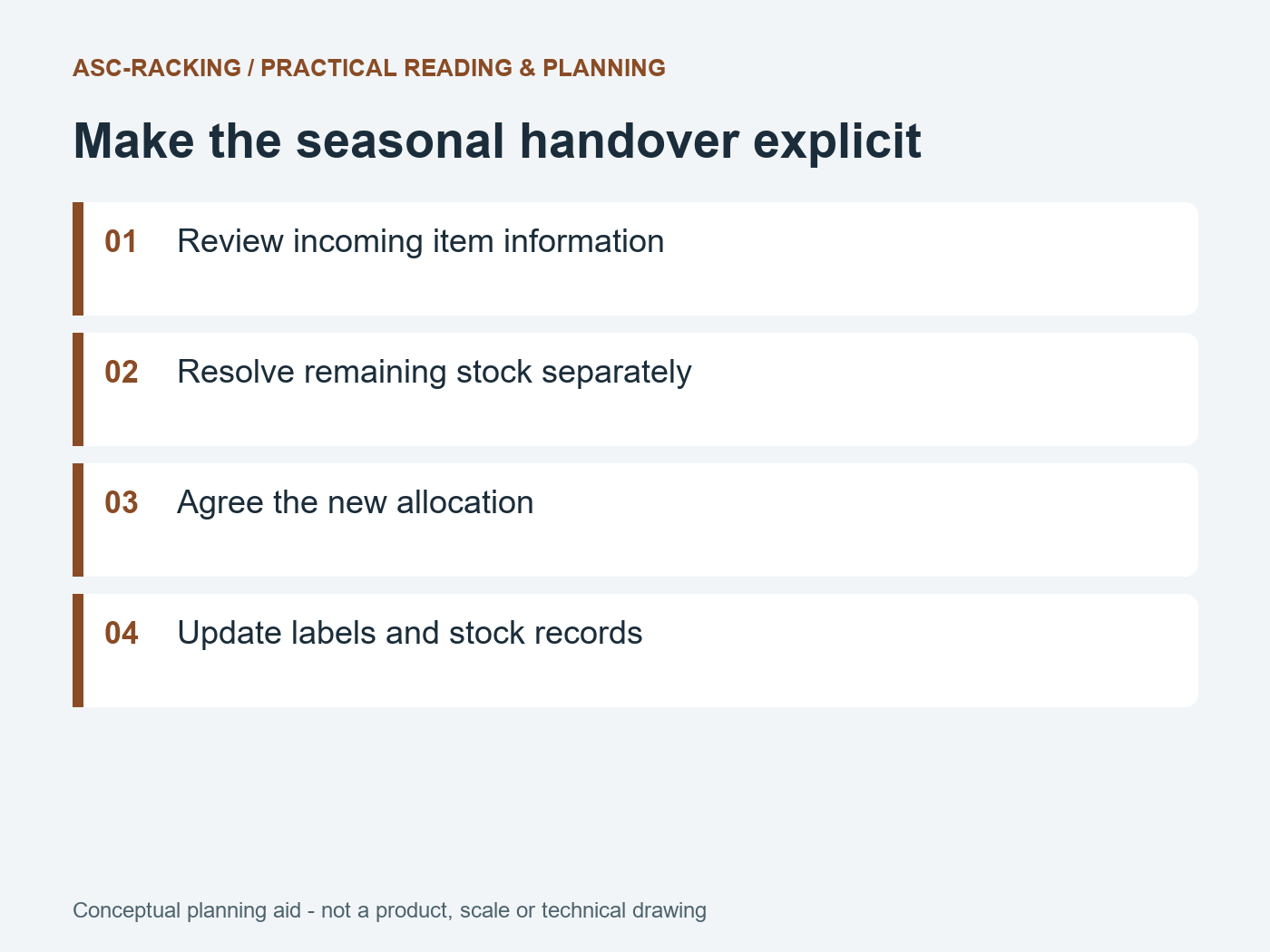
Review the incoming range, current locations and unresolved stock before changing the allocation. Seasonal stockroom organisation needs a recorded home for the new items and a clear decision for what remains. Updating stock labels and records is different from changing the shelving structure; any physical configuration change needs the appropriate supplier or workplace assessment.
A seasonal delivery can create confusion even when the room has enough apparent space. New cartons arrive while older stock, returns and packing materials still occupy the usual locations. If the team puts everything into the nearest gap, the problem may reappear at the next pick or stocktake.
This guide focuses on a handover for ordinary hand-picked retail or small stockroom inventory. It is not a guide to pallet operations, hazardous goods or regulated storage. ASC Racking’s storage service information identifies stockroom shelving within its scope and states that it does not supply pallet racking.
Review what is arriving before reallocating locations
Compare the incoming stock information with the containers and storage positions the team actually uses. Note new item categories, changed pack sizes and any items needing a different handling arrangement. Do not rely only on the number of cartons.
Separate known information from assumptions. If the delivery list does not establish dimensions, quantities or another detail needed for storage planning, resolve it rather than reserving a location on a guess. An empty shelf position is not proof of suitability for an unfamiliar carton.
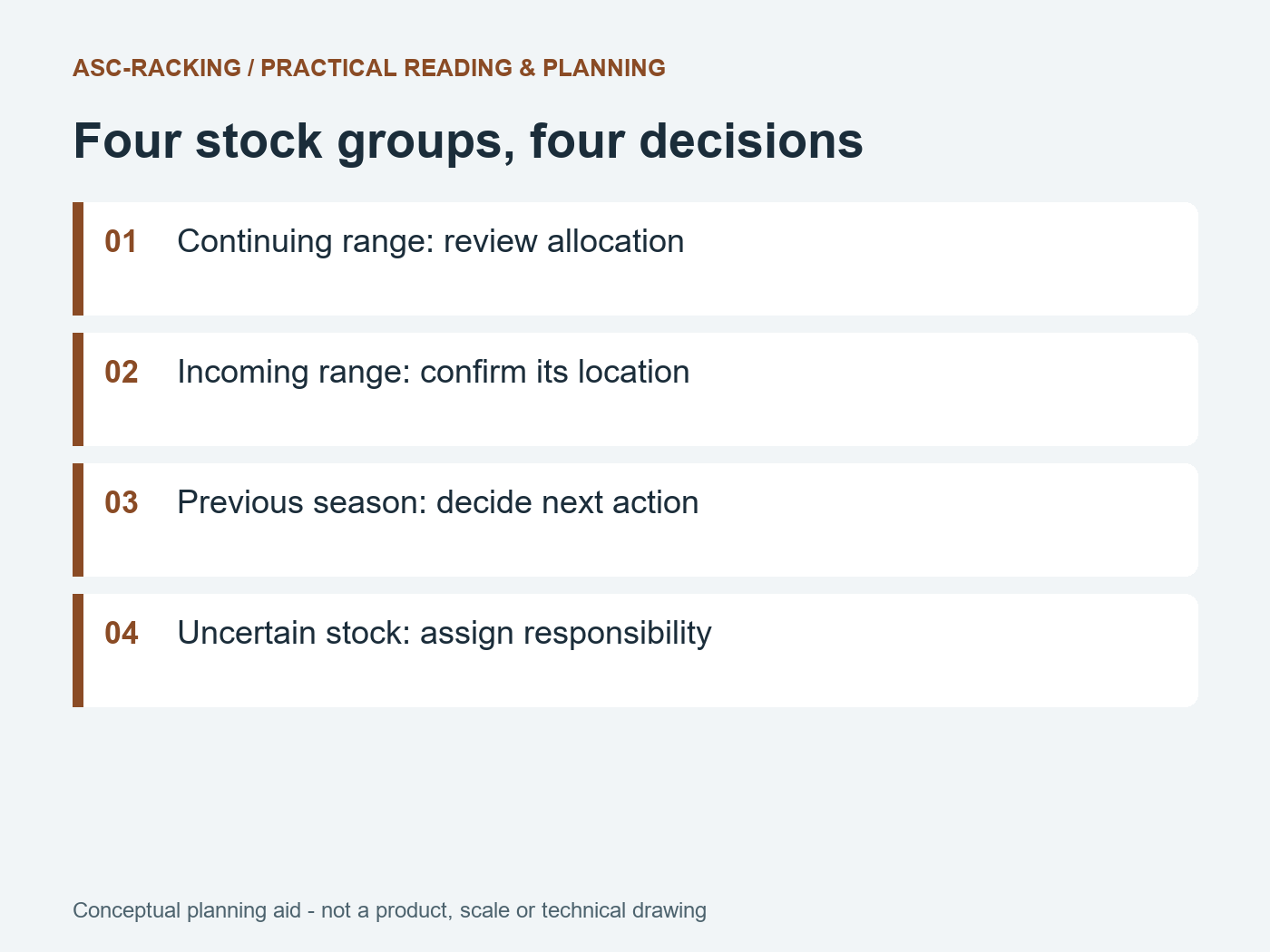
| Stock group | Handover decision | Record to keep current |
|---|---|---|
| Continuing range | Whether its current allocation still works. | Item and location references. |
| Incoming seasonal range | Which agreed locations it will use. | Confirmed item details and assigned positions. |
| Remaining previous-season stock | Whether it stays available, moves or needs another decision. | Status and current location. |
| Returns or uncertain items | Who resolves their status before normal allocation. | The reason for the hold and responsible person. |
Resolve leftover stock as a separate decision
Do not make old stock disappear from the record simply because the new range needs its location. Confirm whether it is still available for ordinary use or sale, awaiting a decision or moving to another agreed place.
A retailer might, for example, keep a continuing item in its usual position while assigning a separate reference to a seasonal variant. That hypothetical choice prevents two visually similar cartons being treated as one item. It does not imply a universal sales strategy or an instruction to discount older stock.
Keep returns and uncertain items distinguishable from ordinary available inventory. The decision about their condition and next action belongs to the business’s actual process. A label cannot turn an unresolved item into confirmed sellable stock.
Choose locations around the real picking task
Look at how staff identify and retrieve items. Which references do they use? Where do they check the stock list? Which products are easily confused? Use those observations to review the allocation within the agreed shelving arrangement.
The objective is not to place every popular item at an assumed “best” shelf height. Item weight, dimensions, handling and the installed system’s specifications still matter. Follow the relevant workplace arrangements rather than adopting a generic layout from an unrelated warehouse.
If the incoming range does not fit the confirmed arrangement, record the issue and obtain an appropriate assessment. Do not add levels, shift structural components or use a higher position merely because the seasonal deadline is approaching.
Update the item and location references together
When an allocation changes, update both the physical identification and the record staff use. A corrected label with an old stock list leaves the next person following the wrong instruction.
Keep the item identity separate from its location. A product remains the same product when it moves, while a location can later be assigned to another item. This separation helps the team explain what changed during the handover.
Agree how temporarily split stock is recorded if more than one location is genuinely required. Avoid an informal “extra boxes behind the others” arrangement that only one member of staff knows about. The method can be simple as long as it reflects the actual locations.
Check the shelving question separately
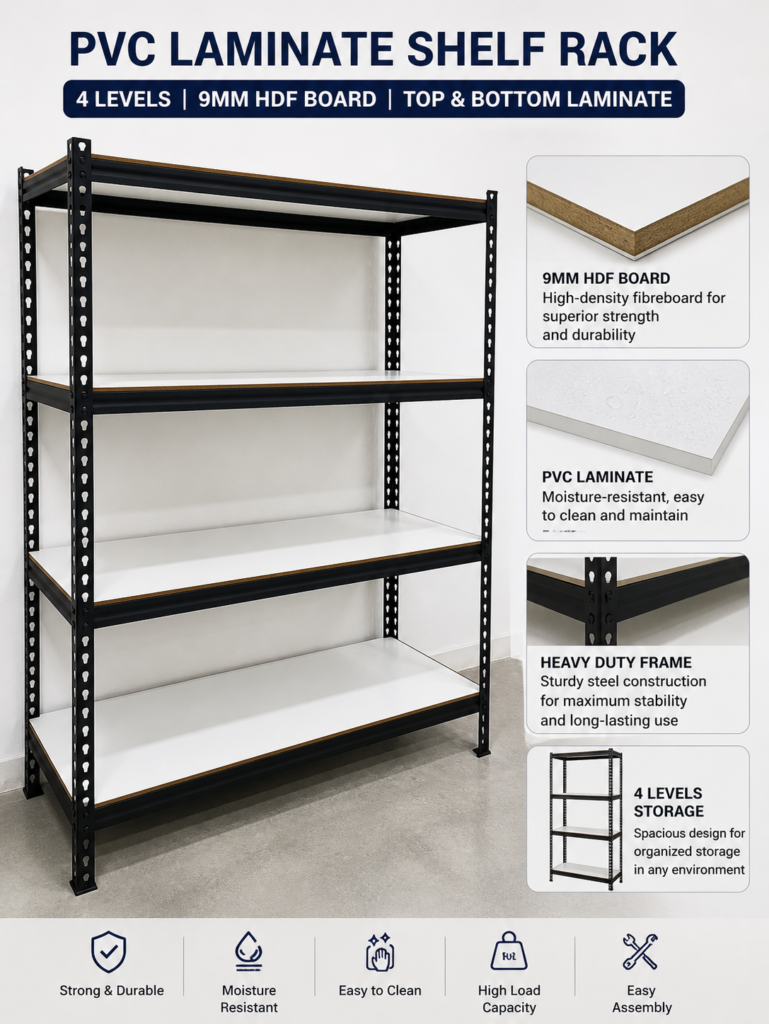
ASC’s Full Metal racks and PVC Laminated racks are different product categories, not interchangeable guarantees about load or environment. The actual system and its stated use determine what needs confirming.
The adjustable versus fixed shelving guide discusses physical flexibility. A rack described as adjustable still needs the correct assessment and instructions for any change. The stock allocation exercise should not be used as an informal assembly guide.
Keep the supplier’s confirmed arrangement and relevant instructions accessible to the responsible person. When the range changes substantially, pass on the actual item and container information rather than asking for an answer based only on a photograph of a crowded shelf.
Test the handover before the busiest period
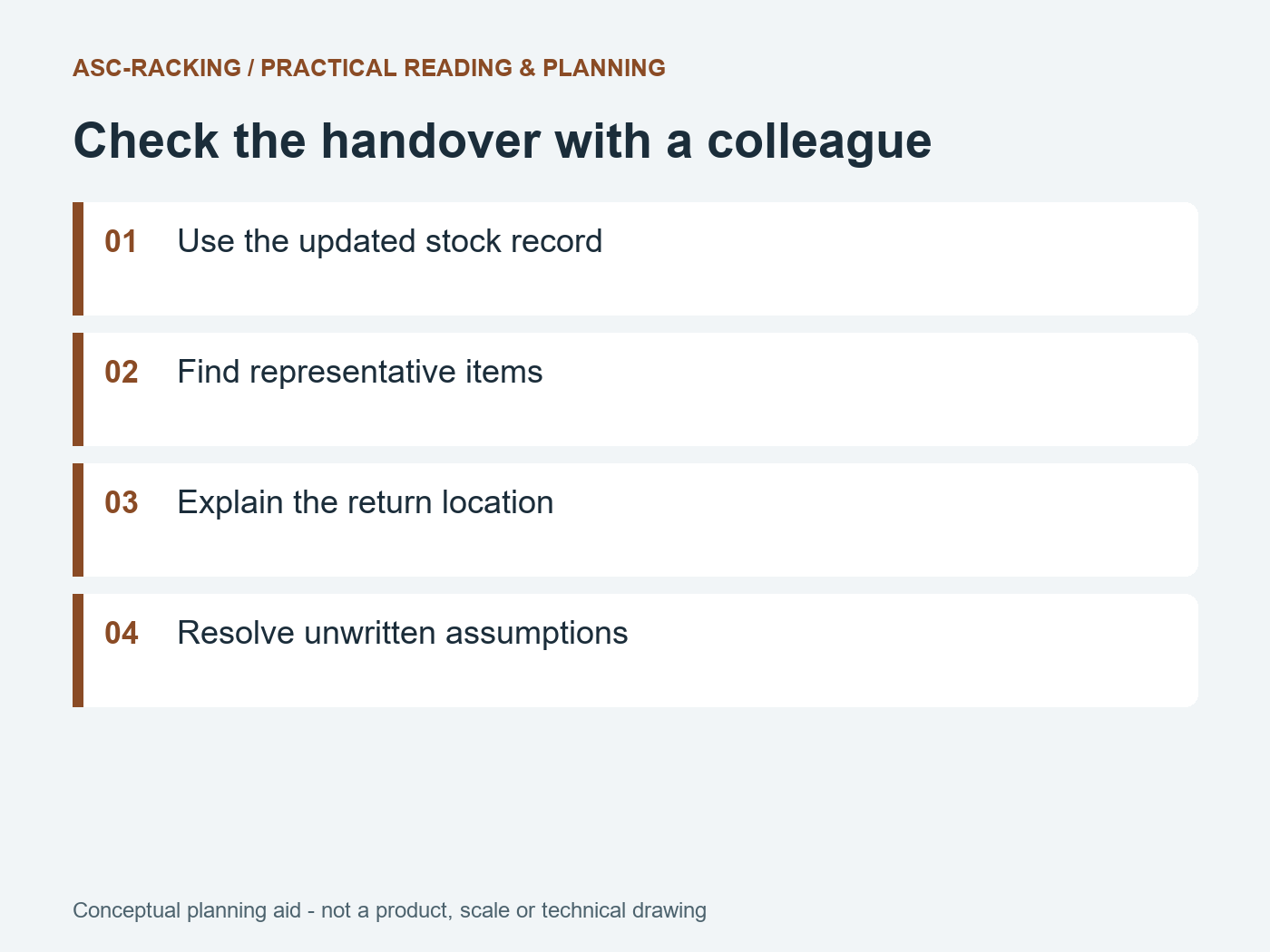
Ask a colleague who did not make the allocation to locate a continuing item, a new seasonal item and any item recorded in a temporary position. Have them explain which reference they followed and where the item would be returned.
If something is unclear, fix that particular part of the process. It may be an ambiguous item name, a missing location update or a status that was never resolved. A short trial is more informative than assuming the handover works because the shelves look orderly.
Record who maintains the allocation during the season. If further deliveries or changes arrive, the same process should update the records rather than allow a second unofficial system to develop.
Plan the next review while the decisions are fresh
Note the issues that required clarification and which allocation choices were difficult to maintain. Use those observations when planning the next seasonal change, without treating one busy period as proof that the same layout will suit every future range.
A useful handover is a shared explanation of what is stored, where it belongs and what remains undecided. It should leave the next shift able to work from the record instead of relying on the person who originally arranged the room.
Seasonal stockroom questions
Should every seasonal item have a separate shelf?
Not necessarily. Agree an allocation that makes the actual items distinguishable and retrievable within the confirmed storage arrangement.
Can previous-season stock stay in its current location?
It can remain only as part of a deliberate business and storage decision. Keep its status and location visible rather than leaving it there by default.
Does an adjustable rack mean staff can change its levels?
Do not infer that authority from the product description. Follow the actual system’s instructions and the appropriate supplier or workplace process.
How do I check that the handover works?
Have another authorised person find and return representative items using the updated record and labels. Resolve any step that depends on an unwritten explanation.