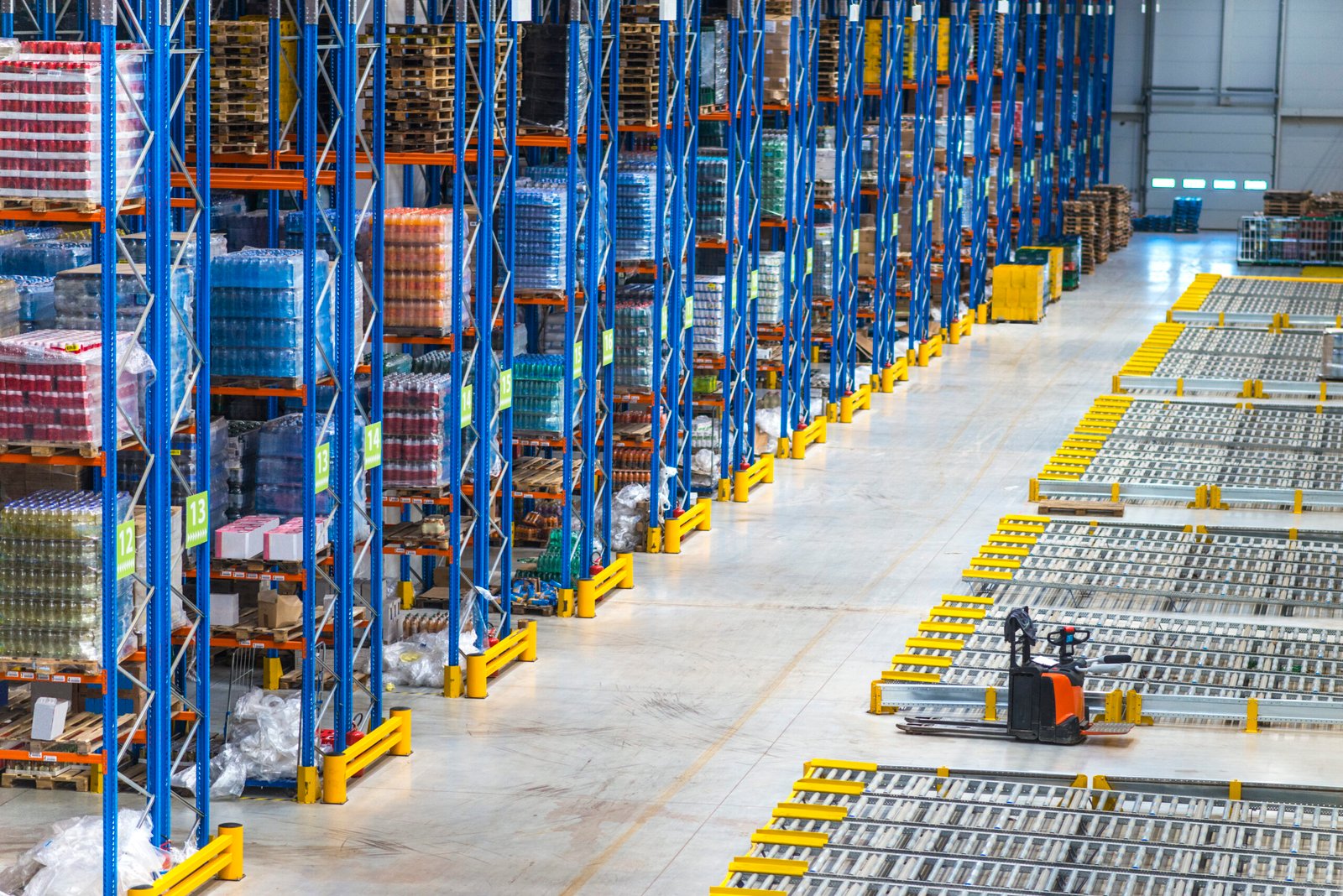
Warehouse racking plays an important role in keeping inventory organised, accessible and off the floor. But a storage rack is also a load-bearing structure, and improper loading, poor installation, impact damage or inadequate maintenance can create serious workplace hazards.
Warehouse racking safety involves selecting a rack suitable for the intended load, installing it correctly, distributing goods appropriately, maintaining safe access, inspecting components for damage and addressing problems before the rack is returned to normal use.
For businesses in Singapore, safe rack management should form part of the workplace’s broader risk-management and workplace safety practices. The Ministry of Manpower (MOM) has specifically advised workplaces to ensure storage racks are designed for their intended storage loads, properly installed, risk-assessed and maintained.
This guide explains the most common warehouse racking safety mistakes, how to load racks correctly, what to check during an inspection and how to choose a storage rack that suits your warehouse requirements.
What Is Warehouse Racking Safety?
Warehouse racking safety is the process of designing, selecting, installing, loading, inspecting and maintaining storage racks so they remain stable and suitable for their intended use.
A safe racking system should account for factors such as:
- Load capacity
- Rack dimensions
- Type and weight of stored goods
- Load distribution
- Rack configuration
- Installation requirements
- Warehouse layout
- Access requirements
- Forklift and equipment movement
- Inspection and maintenance
Safety does not stop once a rack has been installed. Changes to the rack configuration, stored goods, loading practices or warehouse environment can introduce new risks.
Why Is Warehouse Racking Safety Important?
A damaged, overloaded or incorrectly configured rack can affect more than the rack itself. Falling goods can injure workers, damage inventory and interrupt warehouse operations.
Singapore’s Workplace Safety and Health Council notes that warehouses can be accident hotspots, particularly during loading and unloading activities and when forklifts or moving machinery are involved. It also recommends good housekeeping and well-maintained racks to help prevent incidents such as falling loads.
Effective rack safety helps businesses:
- Reduce the risk of falling goods
- Protect employees and warehouse visitors
- Reduce inventory damage
- Maintain clear access routes
- Identify rack damage early
- Support safer loading and unloading
- Maintain organised warehouse operations
- Extend the useful life of suitable storage equipment
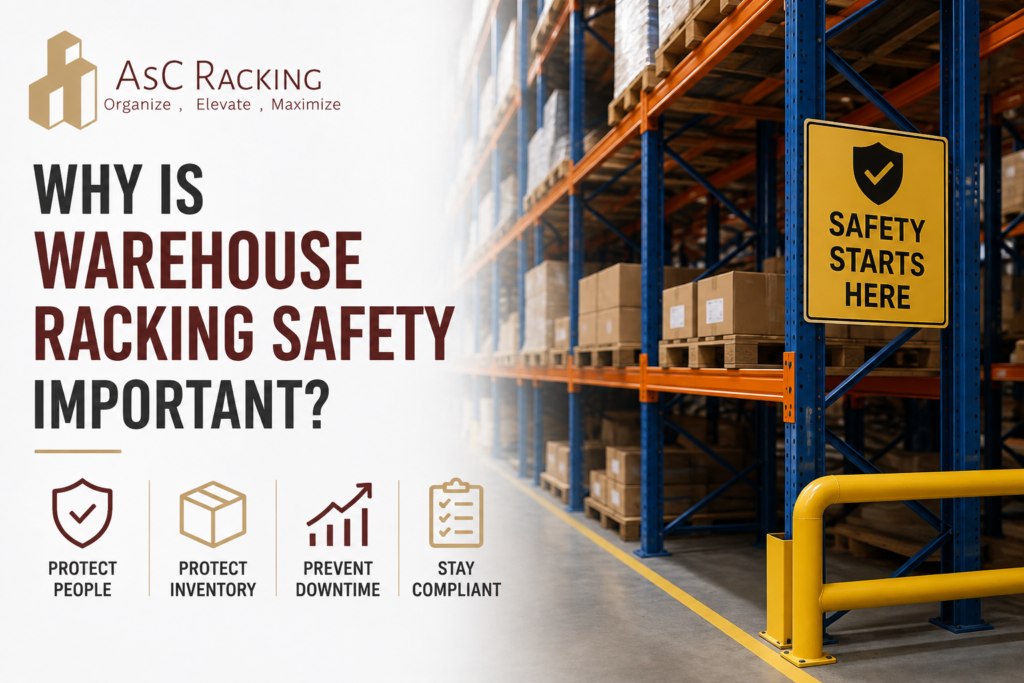
15 Common Warehouse Racking Safety Mistakes
1. Exceeding the Rack’s Load Capacity
One of the most important rack safety principles is knowing how much weight the system is designed to support.
Do not assume that every shelf or rack can support the same load. Capacity depends on the rack’s design, dimensions, materials, configuration and loading conditions.
Always follow the manufacturer’s specified capacity for the particular rack configuration.
2. Unevenly Distributing Heavy Loads
Even when the total weight is within the rack’s rated capacity, poor load distribution can create unnecessary stress.
Where appropriate, distribute goods across the available storage surface rather than concentrating excessive weight in one location.
The load should also be positioned so that it remains stable during normal warehouse operations.
3. Storing Heavy Items Too High
Large and heavy items can be more difficult and hazardous to handle when stored at higher levels.
Singapore workplace-safety guidance recommends placing larger and heavier objects on lower racks while lighter and smaller objects are stored higher.
This approach can also make frequently handled heavy goods easier to access.
4. Ignoring Bent or Damaged Uprights
Rack uprights are structural components. Bends, dents or impact damage should not be treated as cosmetic problems.
If an upright has been damaged, the rack should be assessed according to the manufacturer’s requirements and the workplace’s safety procedures before continued use.
5. Using Damaged Beams
Beams support the stored load and are therefore critical to the stability of the system.
During inspections, look for visible deformation, displacement, damaged connections or other signs that a beam may no longer be in its intended condition.
6. Failing to Secure the Rack Correctly
A rack needs to be installed according to its design and intended application.
Improper installation can affect stability and load-bearing performance. The Ministry of Manpower specifically advises workplaces to ensure storage racks are properly installed.
7. Blocking Warehouse Aisles
A safe storage system must also provide safe access.
Do not allow stored goods, packaging or equipment to obstruct designated walkways or access routes.
Aisles should provide sufficient space for the intended warehouse activities and equipment.
8. Placing Loads Beyond the Intended Storage Area
Goods should be positioned securely within the rack’s intended storage area.
Uncontrolled overhangs, unstable stacking or poorly positioned goods can increase the chance of items falling or being struck during warehouse activities.
9. Mixing Loads Without Checking Capacity
Different products can have dramatically different weights, dimensions and handling requirements.
Before changing the type of goods stored on a rack, check whether the existing rack configuration is appropriate for the new application.
10. Ignoring Forklift Impact
Forklifts and other moving equipment can accidentally strike storage racks during loading and unloading.
Even if the rack appears usable after an impact, visible damage should be assessed before normal operation continues.
Forklift and vehicle movement is an important warehouse safety consideration because transportation and storage activities involve risks associated with vehicles and moving equipment.
11. Continuing to Use a Damaged Rack
A damaged rack should not remain in service simply because it still appears functional.
Depending on the severity and location of the damage, continued use could expose workers and inventory to unnecessary risk.
Isolate the affected area where appropriate and arrange for a competent assessment or replacement in accordance with the manufacturer’s recommendations and workplace procedures.
12. Skipping Routine Inspections
A rack can become damaged after installation through impacts, changes in loading, environmental conditions or normal warehouse activity.
Regular checks can help identify problems before they become more serious.
13. Failing to Train Warehouse Staff
Employees who load, unload or work around storage racks should understand basic safe-storage procedures.
Training should cover topics such as:
- Load limits
- Safe loading practices
- Proper placement of goods
- Damage reporting
- Aisle clearance
- Forklift awareness
- What to do when rack damage is discovered
14. Changing the Rack Configuration Without Reassessment
Adding levels, changing shelf positions, replacing components or modifying the layout can change the way a racking system is used.
Do not assume that a modified rack automatically retains the same performance characteristics.
Any significant change should be evaluated against the manufacturer’s specifications and the intended load.
15. Choosing the Wrong Rack for the Inventory
Not every storage rack is suitable for every warehouse application.
A small storeroom storing cartons may require a different solution from a warehouse storing heavier industrial materials.
The right system should be selected based on:
- Weight
- Dimensions
- Volume
- Frequency of access
- Available floor space
- Available height
- Handling method
- Future storage requirements
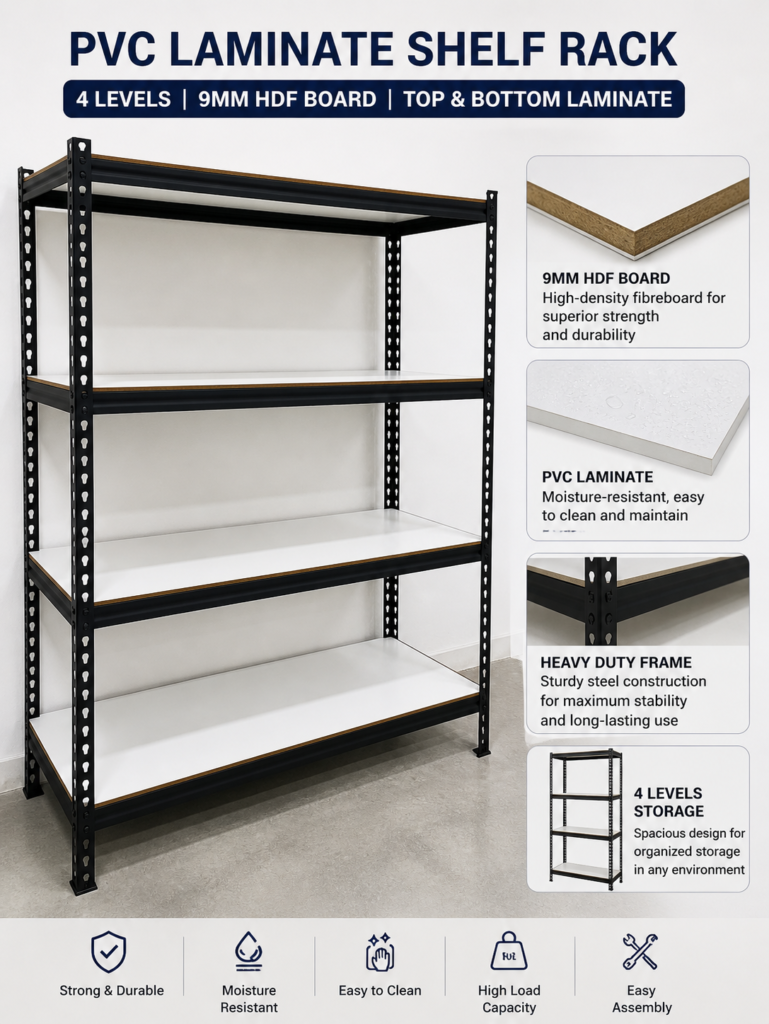
ASC Racking currently offers boltless, full-metal, U-shaped, L-shaped and PVC-laminated storage solutions, allowing the rack configuration to be matched to different storage environments and space requirements.
How Much Weight Can a Warehouse Rack Hold?
There is no single weight limit that applies to every warehouse rack.
Rack capacity depends on the specific design and configuration.
Important factors include:
| Factor | Why It Matters |
| Rack dimensions | Determines the available loading area |
| Shelf dimensions | Influences how loads are distributed |
| Material and construction | Affects structural performance |
| Number of levels | Changes the overall rack configuration |
| Load distribution | Concentrated loads can affect performance |
| Rack height | Forms part of the overall system design |
| Configuration | Different rack designs have different capacities |
| Installation | The rack must be assembled according to its intended design |
Always use the manufacturer’s specified load capacity for the exact rack configuration rather than relying on a generic figure.
For example, ASC Racking offers different rack systems for different storage requirements, so the appropriate capacity should be considered at the individual product and configuration level.
How Should Heavy Items Be Stored on Warehouse Racks?
As a general safe-storage principle, larger and heavier goods should generally be positioned on lower rack levels, while lighter goods can be stored higher where appropriate. Singapore workplace-safety guidance specifically recommends this approach for improved stability.
When storing heavy items:
- Check the rack’s rated capacity.
- Confirm the weight of the goods.
- Distribute loads appropriately.
- Avoid unstable stacking.
- Keep goods within the intended storage area.
- Keep aisles and access routes clear.
- Follow the manufacturer’s loading instructions.
- Report damage or instability immediately.
Warehouse Racking Inspection Checklist
A practical inspection should look at both the rack itself and the surrounding storage environment.
| Inspection Point | What to Check |
| Uprights | Bends, dents, deformation or impact damage |
| Beams | Bending, displacement or damaged connections |
| Shelves | Cracks, deformation or other visible damage |
| Connections | Loose, missing or damaged components |
| Load labels | Correct, visible and appropriate for the configuration |
| Rack alignment | Leaning or unusual movement |
| Floor | Suitable and stable installation surface |
| Aisles | Clear access and sufficient working space |
| Stored goods | Stable and appropriately positioned |
| Surrounding area | Forklift, vehicle and housekeeping hazards |
The Workplace Safety and Health Council recommends good warehouse housekeeping and well-maintained racks as part of preventing hazards such as falling loads.
What Should You Do If a Warehouse Rack Is Damaged?
If damage is discovered, do not simply ignore it or continue loading the affected area.
A practical response is:
Identify → Isolate → Assess → Repair or Replace → Inspect → Return to Service
Identify
Determine which component has been damaged and whether stored goods or nearby equipment are also affected.
Isolate
Where appropriate, prevent people from using the affected area until its condition has been assessed.
Assess
Have the damage evaluated according to the manufacturer’s recommendations and the workplace’s safety procedures.
Repair or Replace
Use suitable replacement components or an appropriate repair process rather than improvising structural modifications.
Inspect
Confirm that the rack is suitable for use after the repair or replacement.
Return to Service
Only return the affected area to normal operation once it has been assessed as suitable for use.
Warehouse Racking Maintenance
Maintenance is an ongoing part of rack safety.
A suitable maintenance programme can include:
- Routine visual checks
- Checking for impact damage
- Monitoring damaged components
- Checking rack connections
- Keeping load information visible
- Maintaining clear access routes
- Reviewing changes to rack configuration
- Addressing identified defects
- Keeping appropriate inspection or maintenance records
ASC Racking also uses epoxy powder coating on its storage racks, which the company states provides corrosion resistance and durability in humid or industrial environments.
Warehouse Racking Safety and Forklift Operations
Forklift activity is one of the key considerations when planning warehouse rack safety.
Forklifts operate around racks during loading, unloading and material movement. Poor traffic management, limited visibility, incorrect manoeuvring or insufficient clearance can increase the likelihood of impact.
To reduce risks:
- Maintain suitable access routes.
- Keep aisles clear.
- Ensure operators follow workplace procedures.
- Avoid unnecessary obstruction around rack locations.
- Inspect racks after significant impacts.
- Keep stored goods stable.
- Separate pedestrian and vehicle movement where the warehouse risk assessment requires it.
Singapore’s WSH Council identifies vehicular incidents as an important safety concern in the transportation and storage sector.
Warehouse Racking Safety in Singapore
Singapore businesses should treat storage-rack safety as part of their wider workplace safety and risk-management responsibilities.
MOM’s guidance on storage racks recommends three important steps:
- Ensure existing storage racks are designed for the intended storage load and properly installed.
- Perform a risk assessment on the use of storage racks.
- Establish a maintenance regime for the storage racks.
The Workplace Safety and Health Council also provides warehouse-safety resources covering safe storage and warehouse operations.
Requirements can depend on the nature of the workplace and its activities, so businesses should consult the applicable Singapore workplace-safety requirements and relevant professional or manufacturer guidance for their specific situation.
How to Choose a Safe Warehouse Racking System
Safety starts before the rack is installed.
When selecting a warehouse storage rack, consider:
1. Load Requirements
Determine the weight of the goods that will be stored.
2. Product Dimensions
Consider the width, depth, height and shape of the goods.
3. Storage Height
Use available vertical space while ensuring the selected system is appropriate for the warehouse environment.
4. Access Requirements
Consider how frequently goods need to be accessed and what equipment will be used.
5. Rack Configuration
Different rack configurations are suitable for different storage environments and space requirements.
6. Future Storage Needs
Consider whether inventory volumes or product dimensions may change.
7. Installation Requirements
Make sure the rack can be installed correctly in the intended location.
8. Load Capacity
Confirm that the rack is designed for the required load rather than selecting a system based only on appearance or price.
ASC Racking currently provides customized storage-rack solutions for warehouses, businesses and residential spaces, including boltless and heavy-duty systems.
Boltless Racks vs Heavy-Duty Racks: Which Is Safer?
The question should not simply be which rack is “safer.”
The better question is:
Which rack is appropriate for the intended load and application?
Boltless racks can be useful for flexible storage requirements where their capacity and configuration match the goods being stored.
Heavy-duty racking systems are intended for applications involving substantially heavier loads and more demanding storage requirements.
The correct choice depends on the actual load, dimensions, configuration and intended use.
Choosing a rack that is properly matched to the application is more important than choosing a rack based solely on its category.
When Should a Warehouse Rack Be Replaced?
Replacement may need to be considered when a rack has:
- Significant structural deformation
- Severe impact damage
- Serious corrosion
- Missing critical components
- Persistent instability
- Damage that cannot be appropriately addressed
- An uncertain or unverifiable load capacity
- A configuration that no longer matches the intended application
If there is uncertainty about the condition of a structural component, seek an appropriate assessment rather than assuming it is safe.
Warehouse Racking Safety FAQs
What is warehouse racking safety?
Warehouse racking safety involves selecting, installing, loading, inspecting and maintaining storage racks so they remain suitable and stable for their intended use.
How much weight can a warehouse rack hold?
The capacity depends on the rack’s design, dimensions, materials, configuration and loading conditions. Always follow the manufacturer’s specified load capacity for the exact rack system.
How often should warehouse racks be inspected?
Inspection requirements can depend on the workplace, rack system and risk assessment. Businesses should establish an appropriate inspection and maintenance regime rather than relying on a single universal interval.
What should I check during a rack inspection?
Check uprights, beams, shelves, connections, load labels, rack alignment, the installation area, stored goods and surrounding access routes for visible damage or unsafe conditions.
What should I do if a forklift hits a rack?
Assess the affected area and prevent continued use where appropriate until the rack has been properly assessed. Do not assume that a rack is safe simply because the damage appears minor.
Can a bent rack upright be repaired?
A damaged structural component should be assessed according to the manufacturer’s recommendations and appropriate workplace safety procedures. Do not improvise structural repairs or continue using significantly damaged components without proper assessment.
Should heavy items be stored on the top rack level?
Generally, larger and heavier objects should be stored on lower rack levels, while lighter and smaller items can be stored higher where appropriate. Singapore WSH guidance specifically recommends this arrangement for better stability.
Do warehouse racks need maintenance?
Yes. MOM’s guidance recommends establishing a maintenance regime for storage racks.
How do I choose the right warehouse rack?
Start with the weight and dimensions of the goods, required storage capacity, warehouse height, access requirements, rack configuration, installation conditions and future storage needs.
What is the most important warehouse racking safety rule?
Do not exceed the rack’s intended capacity or use a rack in a configuration for which it was not designed. Proper installation, loading, inspection and maintenance are equally important parts of a safe storage system.
Key Takeaways
Warehouse racking safety is not just about choosing a strong rack. It involves the entire lifecycle of the storage system from selection and installation to loading, inspection, maintenance and eventual replacement.
The most important practices are to:
- Choose racks designed for the intended loads.
- Follow the manufacturer’s load ratings.
- Distribute stored goods appropriately.
- Place heavier goods lower where appropriate.
- Keep aisles and access routes clear.
- Inspect racks for damage.
- Address forklift impacts promptly.
- Maintain the storage system.
- Train workers on safe loading and handling practices.
- Reassess racks when their configuration or intended use changes.
For businesses planning a new warehouse storage system or upgrading an existing one, selecting the right rack configuration and capacity is an important first step toward safer and more efficient storage.
Why Choose ASC Racking?
ASC Racking provides storage-racking solutions in Singapore, including boltless storage racks, heavy-duty metal racking, L-shaped and U-shaped systems, PVC-laminated racks and customized storage solutions. The company also offers delivery and installation across Singapore and promotes free consultation for custom requirements.
For businesses that need a storage system matched to their available space, inventory and intended use, a customized assessment can help determine the appropriate rack configuration before installation.
Need help choosing the right storage rack? Contact ASC Racking for a consultation.